Why Do I Feel So Flat and Numb All the Time?
Exhausted but can't rest? Numb but not exactly sad? For months I thought it was depression. Turns out my brain was just running on empty.
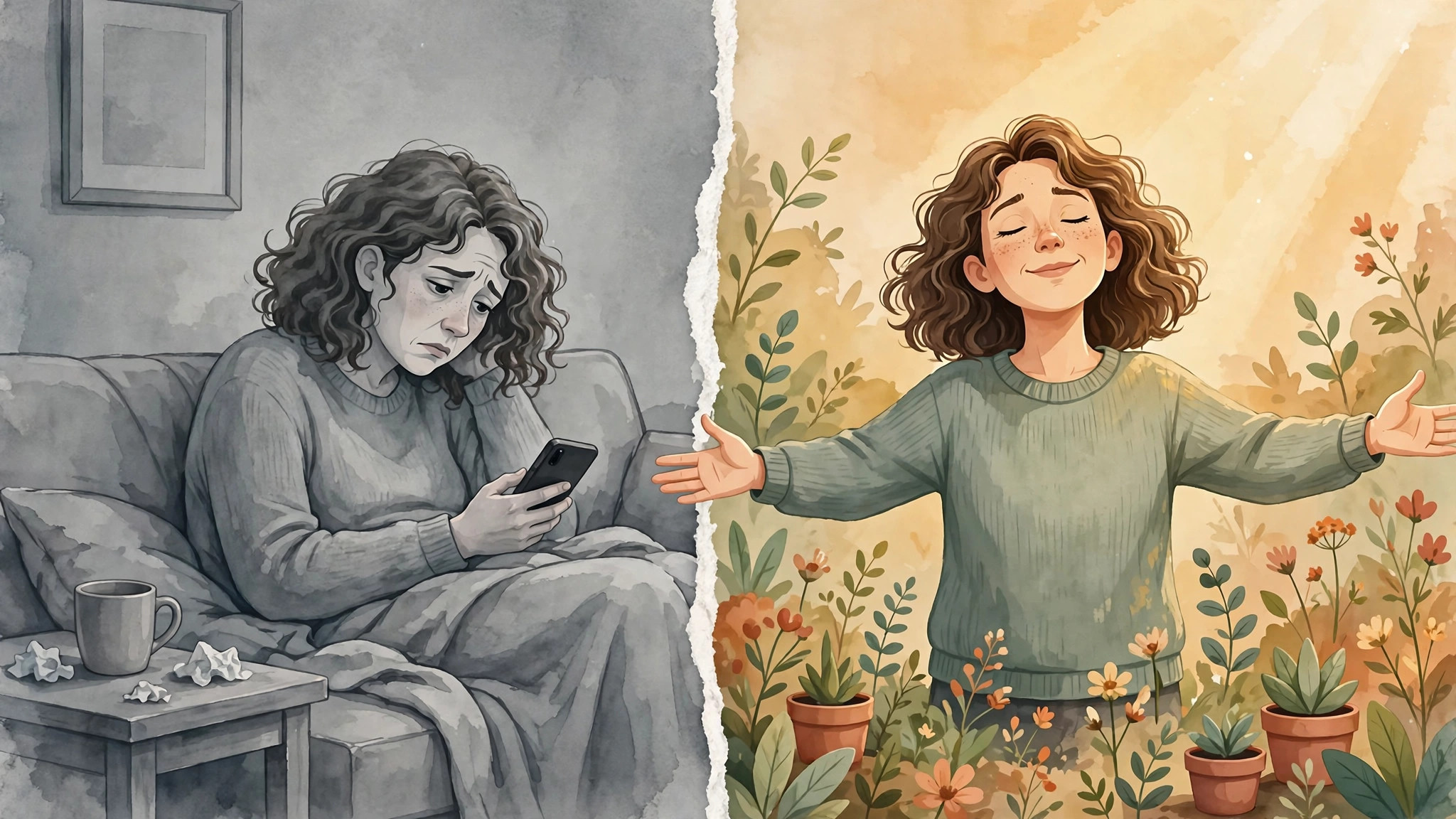
For about three months last year, I was convinced I was depressed.
Not the crying kind. I wasn't sad, exactly — I couldn't have told you what I was sad about. I was flat. Like someone had turned the saturation down on my entire life. Food tasted like cardboard. Jokes didn't land. My favorite show — the one I'd rewatched four times — felt like homework. I'd collapse onto the couch at 8 PM completely wiped out, and then lie awake until 1 AM while my brain replayed a conversation from 2019.
"But you're not sad," my husband said one evening, carefully, the way you'd defuse something. "You're just... not here."
He was right. I wasn't here. I was behind glass, watching my own life happen without me.
Here's what I need to say first, and I mean it: I am not a doctor, and only a professional can tell you what's actually going on in your brain. If what I'm about to describe sounds like you, please talk to someone qualified — this is my story, not a diagnosis, and definitely not medical advice.
But what I learned, slowly, over those three strange months, is that there's a difference between depression and what I've come to call a dopamine drought. And nobody — not one person in thirty-four years — had ever explained the second one to me.
It wasn't sadness. It was emptiness.
Depression, as I understand it, is often heavy. It's a weight. What I had was the opposite of heavy — it was absent. Like a room where the furniture had been quietly removed in the night. I kept walking into rooms in my own head and finding nothing there.
The wanting was gone. That's the part that scared me most. Not the energy — I'd been tired before, every mother of young kids has been tired — but the wanting. My bookshelf stood there full of books I'd been desperate to read, and I couldn't make myself open one. Not because I was sad about books. The desire had just... evaporated. I'd pick one up, read two pages, put it down. Pick up my phone instead.
Which brings me to the scroll hole. You've been there, I know you have. Two hours gone, thumb aching, and you couldn't name a single thing you saw. Here's the thing nobody tells you: that's not relaxation. It's anesthesia. Your brain is begging for dopamine and settling for the cheapest imitation on the shelf, the way you'd drink flat soda when you're dying of thirst. It doesn't work, so you keep drinking.
Then there was the irritability, which honestly embarrassed me more than anything else. I cried — actual tears — because we were out of the good coffee. There was other coffee. Perfectly fine coffee. But I stood in the kitchen and cried about the good coffee like it had been a person I loved. My husband made the other coffee without a word, and I drank it feeling like the worst person alive over coffee.
And the starting. God, the starting. Not big things — I couldn't start small things. Things I wanted to do. I'd sit down to answer a two-line email and my brain would slide off it like a car on ice. I'd think about calling a friend, feel the warmth of wanting to hear her voice, and then just... not. The gap between wanting and doing had become a canyon.
If any of this sounds familiar, I want you to hear this clearly: you are not lazy. You are not broken. You might just be running on empty.
What a drought actually is
Think of dopamine as your brain's "this matters, let's go" signal. It's what makes food taste good, jokes funny, goals exciting. In ADHD brains, this signal is already quiet — quieter than it should be. And then life happens: bad sleep, too much scrolling, months of stress, winter, a pandemic's worth of background anxiety. Each one turns the volume down a little more.
Eventually it's not quiet. It's gone. And when it's gone, everything goes flat. Not dark — flat. There's a difference, and learning the difference changed everything for me, because you don't fix a drought the way you fix a flood.
A drought ends. That's what I kept telling myself, once I understood what I was looking at. Buckets refill. This wasn't my personality. It wasn't who I am. It was a state my brain was in, and states change.
The small things that brought the color back
I didn't fix it with one big thing. I fixed it with a dozen embarrassingly small things, stacked up over weeks. If you're in the flat place right now, start with whichever one makes you roll your eyes least.
Morning light. I resisted this one longest because it sounded too simple to matter. Ten minutes outside before 10 AM — not through a window, actual outside. The first week I did it resentfully, standing on my porch in my pajamas like a grumpy vampire. By week two I noticed the 3 PM crash wasn't hitting as hard. Light sets your brain's clock, and my clock had been set to "confused" for months.
Protein at breakfast. I was living on toast and rage. Turns out dopamine is made from protein — your brain literally builds it out of amino acids from food. I started eating eggs or Greek yogurt in the morning, and I'm not going to claim it was magic, but the 11 AM "I want to cry into a pastry" feeling got quieter. Boring. True.
Movement snacks, not workouts. Forget the gym. When I was at my flattest, the idea of a workout made me want to lie down. So I did sixty seconds instead. Sixty seconds of marching in place, or stretching, or walking to the end of the street and back. Movement is one of the fastest ways to nudge dopamine up, and sixty seconds is short enough that my brain couldn't talk me out of it.
One tiny finished thing. Not a to-do list — one thing. Empty the dishwasher. Reply to one text. Put the laundry in the machine (not fold it — in the machine counts). Finishing releases dopamine, and when you're empty, you need the smallest possible dose to remind your brain what finishing feels like.
Music with a beat. Playlists became medicine. There's actual research on this — rhythmic music lights up dopamine pathways — but honestly I didn't need the research. I needed the kitchen dance parties. Loud. Off-key. Non-negotiable.
The scroll curfew I keep breaking. I'll be honest: this is the one I still fail at. The rule is no phone for the last hour before bed. My success rate is maybe 60%. But the nights I manage it, I fall asleep faster, and the mornings are less gray. I'm telling you this because I want you to know the person writing this isn't fixed and glowing — I'm just better than I was, and better was enough.
Talking to an actual human. Dopamine is social. Isolation starves it. I started calling one friend a week — not texting, calling, voice and all — and every single time, I felt more alive afterward. Every time. Even when I didn't want to pick up the phone.
None of these is dramatic. That's the point. Droughts don't end with a thunderstorm; they end with steady rain.
The relief
The relief wasn't that I found a cure. It was that I found a name for what was happening that wasn't "lazy" or "broken" or "ungrateful." I had spent months quietly believing I'd become a worse person — less fun, less warm, less there — and it turned out I was just a person whose brain had run dry.
If you're behind the glass right now, watching your own life without quite being in it: you're not a worse person. You're a thirsty one. And thirst can be fixed.
Start with the light. Ten minutes. Pajamas are fine.
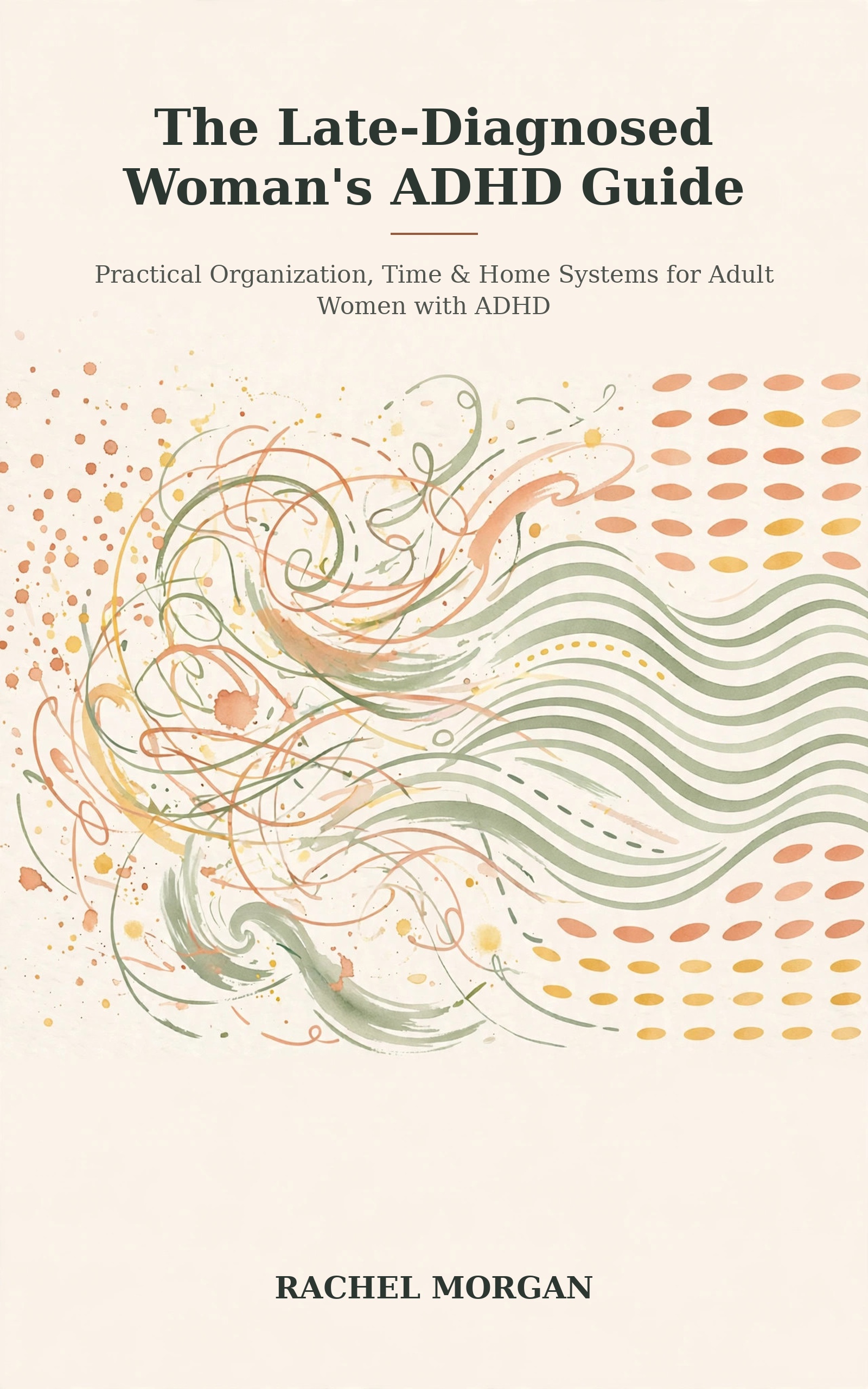
Want the full system?
My book The Late-Diagnosed Woman's ADHD Guide has 20 chapters of practical systems, 14 worksheets, and a 30-day reset plan — written by someone who lives this.
Get the book on Amazon Download Chapter 1 freeFAQs
Is dopamine deficiency the same as depression?
No, though they can overlap and feel similar from the inside — which is exactly why only a professional should sort it out. Depression often involves persistent low mood and hopelessness; what I describe here is more like flatness and emptiness without the sadness. Many people experience both. If you're unsure, please talk to a doctor rather than diagnosing yourself from an article.
Can you actually test for low dopamine?
Not really — there's no simple blood test for brain dopamine levels that a doctor would order for this. It's inferred from symptoms and history, the way most brain-chemistry things are. That's frustrating, I know. It also means you should be skeptical of anyone selling you a "dopamine test" or a supplement protocol based on one.
Do I need medication for this?
Some people do, and there's no shame in it — medication helps many ADHD brains hold onto dopamine better. Others manage with lifestyle strategies like the ones above. Many do both. I'm not qualified to tell you which group you're in, and this article isn't medical advice. A psychiatrist or doctor who understands ADHD is the right person for that conversation.
How long does it take to feel better?
Honestly? Small shifts in days, real change in weeks. The morning light thing took about ten days before I noticed. Nothing here works overnight, and anyone promising overnight is selling something. But "weeks" is not "forever," and when you're in the flat place, that distinction matters more than you'd think.
Rachel Morgan was diagnosed with ADHD at 34, after decades of wondering why everything felt harder for her. She writes practical, shame-free systems for women whose brains work differently — from the book The Late-Diagnosed Woman's ADHD Guide.
This site shares personal experiences and general information, not medical advice. Please consult a qualified professional for diagnosis or treatment.